|
The first edition of this expedition was carried out in May 2006 by two teams. People from Spain, Germany, USA, France and Portugal came to the Marina region as volunteers for developing field work research on orchids.
This report shows our activities during the expedition as well as brief comments about the outcomes obtained.
Which environments did we visit? _________________________________________________
1. Littoral perennial grasslands, thickets and maquis. Thermic vegetation close to the sea shore under wind and drought conditions. Natural communities of perennial grasses as Brachypodium sp., Hyparrhenia sp., Stipa sp., etc., or thyme-like formations as thickets scattered by small stains of maquis.
2. Abandoned traditional fields in littoral environments. Thermic vegetation close to the sea shore under drought conditions. Annual short herbs and grasses (Leontodon sp., Scorpiurus sp., Medicago sp., Lolium sp., Hordeum sp., etc.) and perennial species of grasses-thickets (Brachypodium sp. and Thymus sp.). Terraces in slopes close to the sea shore or up to 1 km towards inland.
3. Mountain grasslands and thickets. Shade and sunny slopes at more than 600 masl where a mixture of grasses, thyme-like communities and shrub formations cohexists. Brachypodium retusum, Thymus vulgaris, Ulex parviflorus and Cistus albidus are the main edificator plants of the landscape of these areas. Due to the altitude temperatures are lower in each season and humidity is higher except in summer.
4. Abandoned traditional fields in mountain slopes. Abandoned terraces in inland mountain slopes between 400 to 800 masl, under cold conditions in winter, cool in spring and relatively hot in summer. High humidity conditions from autumn to spring. Perennial grasses (Brachypodium phoenicoides, Hyparrhenia synaica, etc.), with scattered specimens of thicket elements (Thymus vulgaris, Helichrysum serotinum, Ulex parviflorus, etc.) are the main edificator plants for the landscape of these environments.
How did we work? _______________________________________________________________
- Self-Pollination
To see if the orchid species were able to self-pollinate we conducted an experiment. Insects where excluded from flowers with metal cages (40 cm length, 25 cm diameter) covered with fine gauze. We placed the cages when the flowers were in bud stage to ensure that no pollinators had visited the flower before. The cages remained closed until all the flowers where either dry or fructified.
 mm mm 
- Pollinators
To find out which insect visited each orchid species and determine the possible pollinators, we developed a method of direct observation and capture of the insect for subsequent laboratory determination. Observations of flower visitors were carried out during the late afternoon. Insect visitor counts and capture with net bags were performed by two observers by plant for 15-min periods.

 mm mm 
- Reproductive outcome
We carried out an experiment to study the reproductive outcome of some orchid species. When the orchid is in full fruit phenology, the number of fruits and non-fecundated flowers (recognizable by the dry flower instead of the fruit) is counted in several individuals of the same population. That way, we can determine the proportion of fecundated flowers for each individual and have an idea of how good the orchid species is in having its flowers fecundated in its natural environment.
- New records
We visited several spots, from the coastline towards the inland, to search for new orchid populations and characterize them.
When arriving to a new location, people spread out in pairs to spot some orchid species. When a new record is spotted the following data was collected: species, location, date, GPS location, altitude, soil substrate, aspect of the slope, vegetation, bioclimate, disturbances, phenology of the plant, number of flowers, height, largest diameter of the rosette, smallest diameter of the rosette, flower size, number of fecundated flowers and number of companion orchid in a 30 cm diameter radius.


- Population ecology
In some places where there was a good representative population of species, a permanent plot was settled.Depending on the harshness of the terrain we decided to carry out a rectangular or a degree plot.
The rectangular plots were made in terraces or nearly flat slopes. The center of the rectangle was marked by a stake, then the northern, southern, eastern and western radius was measured and the rectangle was made visible by a rope. Then the following data was collected: species, location, date, plot number, GPS location, radius N, E, S, W, altitude, soil substrate, aspect of the slope, vegetation, bioclimate, disturbances, phenology, number of individuals and height average for individuals in full flower phenology.
The degree plots were used in steep slopes areas. In this case, we fix a centre point with a stake that will stay there for future reference. From that point we measure the radius and orientation of each orchid of the population. As in the previous case we also take data on the species, phenology, number of flowers, largest diameter of the rosette, smallest diameter of the rosette, flower size, number of fecundated flowers and height of each orchid. Additionally, the location, plot number, date, GPS location, soil substrate, aspect, vegetation, bioclimate and disturbances are also collected.
mmm mm mm 
mmm
mmm
mmmmmm
Orchid fragans with a bee full of pollinia stuck to its head.
Results __________________________________________________________________________
The main results from the 2006 Orchid Volunteering Expedition are:
- We found and recorded far more orchid data than we expected.
- The field methodology revealed to be very effective. We kept improving and performing the methodology as we saw what worked and what didn’t in the field.
- The population ecology studies in future expeditions will only use the degree permanent plot. We found that this method is easier and faster to set up regardless of the ruggedness of the terrain. Furthermore, we know the exact position of each orchid of the population studied as well as all of its biological characteristics. Furthermore, this method allows us to expand or reduce the area of the plot as needed.
- Land use change does affect both the distribution and abundance of orchid species more than expected.
Despite those general results, we have come up with some specific results for each of the studies we have carried out.
- Self-pollination
Self-pollination experiments in Ophrys apifera, Ophrys arnoldii, Anacamptis pyramidalis and Aceras anthropophorum revealed that the only species (among the studied) able to self-pollinate was Ophrys apifera.
- Pollinators
No pollinator visitor was recorded, so we could not identify any pollinator species. For future editions of the expedition, pollinator observation will be performed between 10.00 and 14.00, when the flight activity of mate-searching male wasps is highest.
- Reproductive outcome
We studied the reproductive outcome of one species, Aceras anthropophorum. Twelve individuals of a population located in the north face of a 1000 m high “sierra” were randomly selected and studied. In 18 individuals a mean of 15% of the flowers were fecundated. For 2 outstanding individuals the reproductive success was exceptional with more than 90% of their flowers fecundated. Curiously, those two individuals had many flowers and bigger than the other individuals studied. We think that the number of flower per individual and the “quality” of those flowers very much determine their reproductive outcome. If there are more flowers and they are bigger, they probably can produce more scent than their companions which in turn makes them much more attractive to pollinators. In any case, further studies must be carried on to see if statistics can prove this hypothesis to be true.
- New records
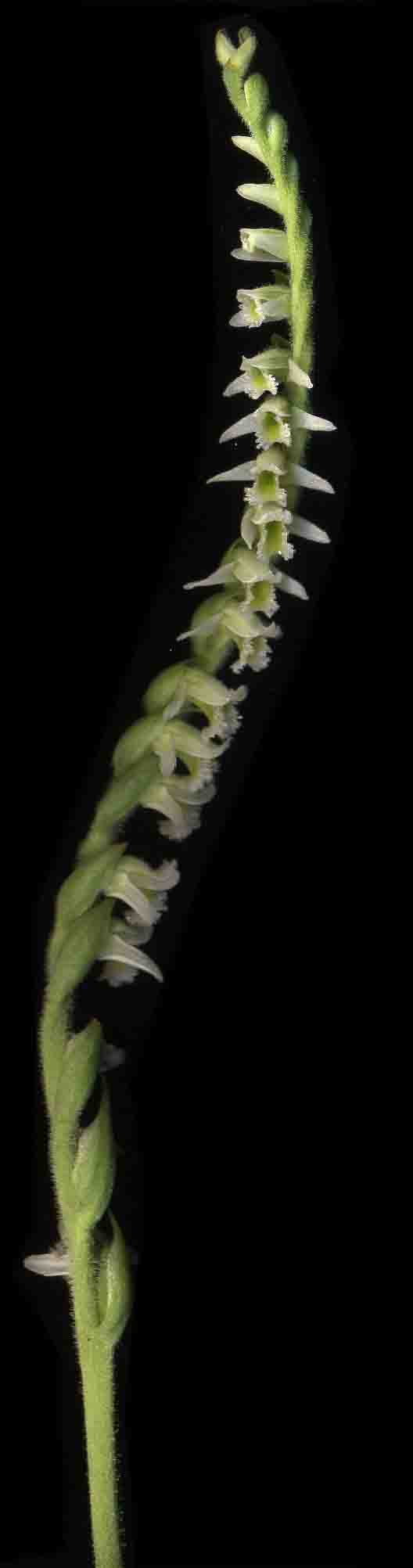
A total of 887 records were collected out of ten orchid species: Anacamptis pyramidalis, Barlia robertiana, Himantoglossum hircinum, Orchis fragans, Ophrys apifera, Ophrys lupercalis, Ophrys lutea, Ophrys scolopax, Spirantis spiralis and Aceras anthropophorum.
The percentage of records of each orchid species is detailed in Figure 1.

Figure 1. Percentage of records of each orchid species.
The number of orchid records was far superior than what could be expected from the study area. We found a new population of Ophrys lutea in Aixortà Sierra, a place where it was not noticed before. We studied 47 individuals of O. lutea of that population.
The total number of records in each study site is shown in Figure 2. The proportion of records of each species in every study site can be seen in Figure 3.

Figure 2. Number of records from each study site in the Marina Region, Spain. The size of the pies is proportional to the number of records.

Figure 3. Proportion of records of each species in every study site in the Marina Region, Spain.
- Population ecology
The permanent plots we have placed all over the area will reveal in following expeditions some so far unknown key points about the ecology and evolution of orchid populations. These are the main points we will determine:
- How does the density of the populations evolve in different areas? We still don’t know if the density of the populations will raise or diminish with land use changes and disturbances.
- Where the recruitment does comes from: vegetative or sexual reproduction?
-
Which is the recruitment rate?
-
How do the populations expand physically? Do they tend to occupy smaller or larger areas over time?
A total of 9 permanent plots were placed. We recorded biological data of 366 individuals of seven species: Anacamptis pyramidalis, Orchis fragans, Ophrys apifera, Ophrys lupercalis, Ophrys scolopax, Spirantis spiralis and Aceras anthropophorum.
As a conclusion __________________________________________________________________
The first edition of the expedition has been very interesting according to the results and the experience itself. Attendant’s opinions encourage us to organize more editions. And why? Because, on one hand, the good environments we visit conform pleasant working experiences in the field and people get satisfied after the week living with us.
On the other hand, we already know that in a medium term period we will have enough information to state more definitive results, some of then unknown and, furthermore, unpredicted or unexpected.
We want to thank every body who came to experience with us an unforgettable week and we are really pleased of inviting you to share this adventure for next spring.
We hope to see you soon
Best regards
Toni Barber & Nico Moity
 PHOTO GALLERY
 DOWNLOAD pdf REPORT DOWNLOAD pdf REPORT |

 VIDEO SAMPLE